Paint Coverage — How to Calculate Exactly How Much Paint You Need
What It Solves
The most common painting mistake is buying the wrong amount of paint. Too little means a frantic trip back to the store hoping the same color batch is still in stock. Too much means storing half-empty gallons for years until they dry out. The problem is that room sizes vary, doors and windows take up different amounts of wall space, and paint coverage depends on surface texture and application method. The calculator solves this by taking the actual measurements of your room — wall dimensions, door and window counts, number of coats — and producing a number you can take straight to the hardware store.
The Real Problem
The rule of thumb "one gallon per room" is wrong for almost every room. A typical 12 by 12 foot bedroom with 8 foot ceilings has roughly 320 square feet of wall area after subtracting one standard door (21 square feet) and two standard windows (30 square feet total). One gallon of paint covers about 350 to 400 square feet on a smooth surface. So one gallon is barely enough for a single coat. If you need two coats — and most rooms with color changes need two — you need two gallons. Add a vaulted ceiling or textured walls that absorb more paint and the estimate changes again. The calculator accounts for all of this. Without it, you are guessing, and the guess is usually wrong in the direction of buying too little.
How to Use It
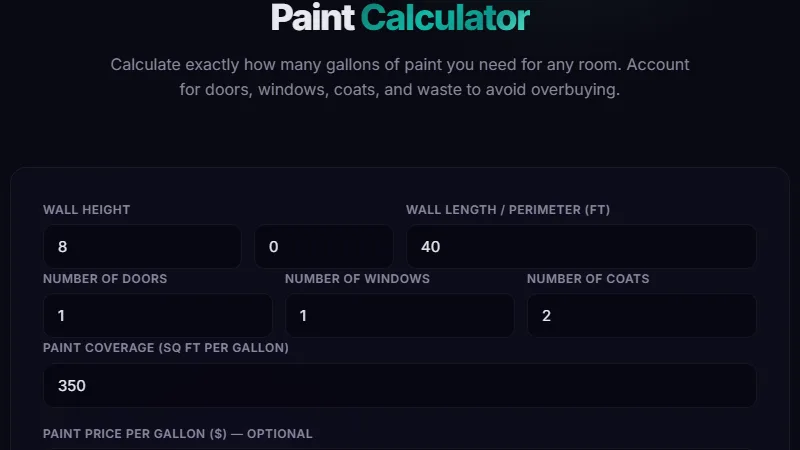
Enter the length, width, and height of the room. The calculator computes the total wall area. Then enter the number of doors and windows — each door deducts 21 square feet and each window deducts 15 square feet. Adjust these numbers if your doors or windows are non-standard sizes. Select how many coats you plan to apply. Most color changes need two; repainting the same color needs one. Add a waste factor, usually 10 percent to account for spills, roller absorption, and touch-ups. The result shows gallons needed for each coat and the total purchase recommendation with a note on which container sizes to buy for the best value.
Walkthrough
Take a 14 by 16 foot living room with 9 foot ceilings, two doors, and three windows. Wall area before deductions is 540 square feet. Subtract 42 square feet for doors and 45 for windows, leaving 453 square feet. Two coats means 906 square feet of coverage needed. Add 10 percent waste: 997 square feet. At 400 square feet per gallon, you need 2.5 gallons, so buy 3 gallons. The calculator tells you to buy one gallon and one 5-liter can if available, or round to 3 full gallons. Without the calculation, most people would buy 2 gallons and end up short.
Planning for Multiple Rooms
If you are painting the whole house, calculate each room separately and add the totals. The calculator does not currently batch multiple rooms, but the per-room calculation is fast enough that you can run it once per room and sum the results yourself. Pay attention to color: if different rooms use different colors, you cannot combine their paint needs. If they all use the same color, you can buy larger containers that are cheaper per gallon. A 5-gallon bucket costs about 20 percent less per gallon than individual gallons. The calculator helps you make that decision by showing the exact total across rooms.
Accounting for Ceilings and Trim
The wall area calculation does not include ceilings or trim. Ceiling paint is typically a different product — flat white ceiling paint — and the coverage rate can be different. To estimate ceiling paint, measure the ceiling area (length times width) and divide by the coverage rate on the can. Trim paint is trickier because it depends on the width of the baseboards and crown molding. A linear foot calculation works better for trim. Use the square footage calculator for the ceiling and estimate trim paint at about 100 square feet per quart for standard baseboards. The paint calculator focuses on walls because that is where most of the paint goes and where most estimation errors happen.
Limitations
The calculator assumes smooth walls. Textured surfaces like knockdown, orange peel, or popcorn can absorb 10 to 20 percent more paint. Dark colors over light primer may need an extra coat that the calculator does not predict. Paint quality affects coverage — premium paints often cover better and require less paint per square foot. The calculator uses a standard 400 square feet per gallon, but check the actual can because coverage rates vary by brand and product line. The door and window deductions use standard sizes; if you have oversized windows or French doors, measure the actual area and use the custom deduction option.
FAQ
How many square feet does a gallon of paint cover?
Most interior latex paints cover 350 to 400 square feet per gallon on smooth, primed surfaces. Rough surfaces like brick or stucco may cover only 200 to 250 square feet. Always check the label on the specific paint you plan to buy.
Do I always need two coats?
Not always. If you are painting the same color over a similar existing color, one coat may suffice. If you are going from dark to light or covering stains, two coats are the minimum. The calculator defaults to two coats because most projects need them.
What is the waste factor and why 10 percent?
The waste factor accounts for paint left on roller covers, paint that drips or spills, and the extra needed for cutting in around edges. Ten percent is a reasonable average. For textured walls or inexperienced painters, increase it to 15 or 20 percent.
Can I use the calculator for exterior painting?
The same math applies, but exterior surfaces are often more porous and may need more paint. Exterior paint also covers less per gallon (typically 250 to 350 square feet). Adjust the coverage rate in the calculator to match the exterior paint you are using.
Should I buy more paint than the calculator says?
Buy exactly the number it says rounded up to the next whole gallon or liter. Having a partial gallon left for touch-ups is smart. Having three unopened gallons stored in the garage is wasteful. Use the calculator's recommendation to buy the right amount.
Conclusion
Use the calculator before every painting project, whether it is a single accent wall or an entire house. Do not rely on it for textured or specialty surfaces without adjusting the coverage rate. For exterior projects, reduce the coverage estimate by 25 percent. The calculator is most valuable as a planning tool that prevents the two worst outcomes: running out mid-project and overbuying by several gallons. Combine it with the square footage calculator for ceiling measurements and the flooring calculator if you are planning a full room renovation.
For other home improvement projects, the concrete calculator and flooring calculator use similar area-based math and are useful companions for renovation planning.
← Back to Blog